
 EN
EN
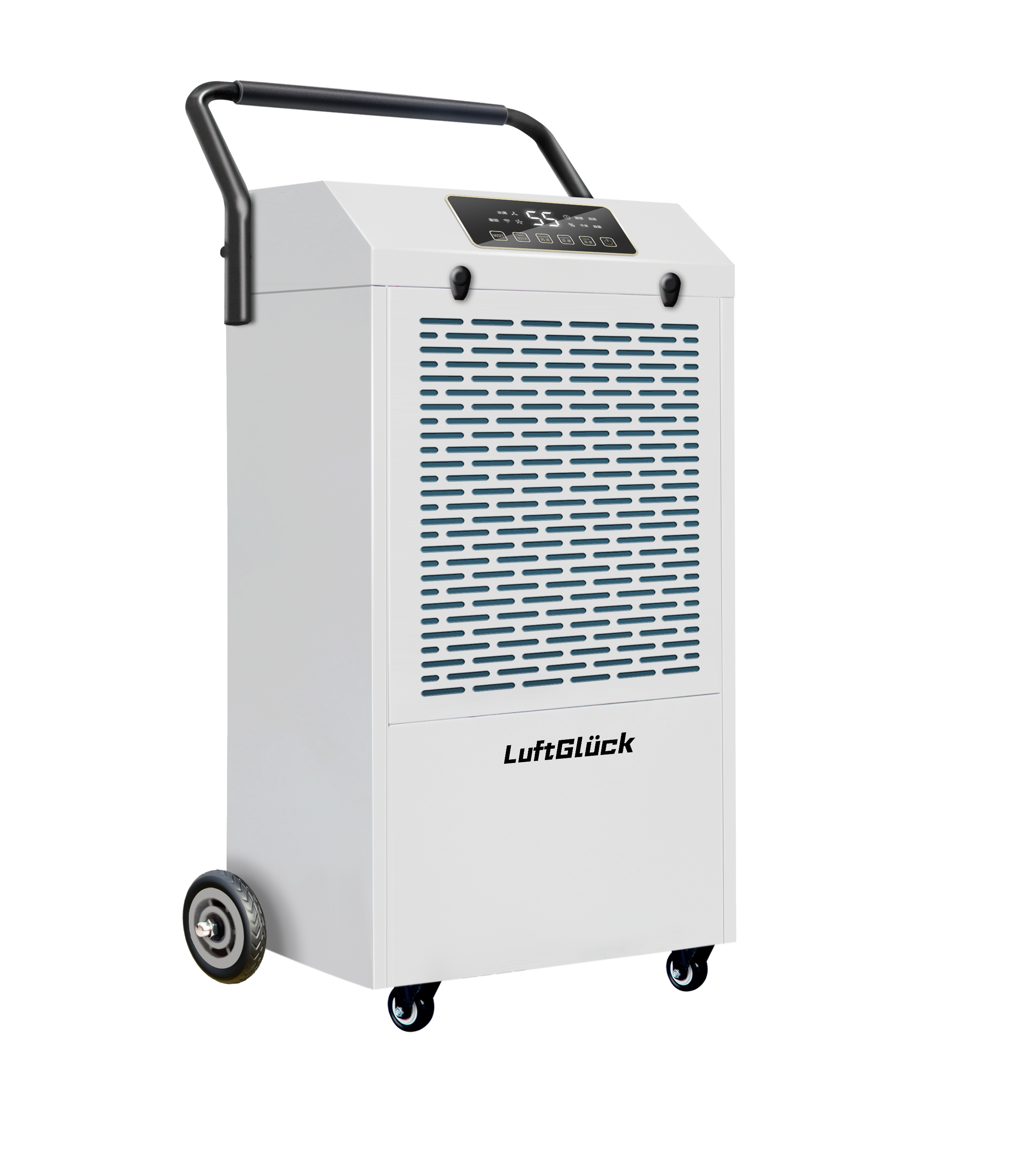
Commercial facilities face unique moisture control challenges that residential properties rarely encounter. From sprawling warehouses to bustling manufacturing plants, these environments demand robust solutions capable of managing substantial humidity levels across vast square footage. High-capacity dehumidifiers have become the cornerstone of effective moisture management in commercial settings, offering the power and reliability needed to maintain optimal conditions. Understanding why commercial spaces rely on these powerful systems reveals the critical role they play in protecting assets, ensuring operational efficiency, and maintaining healthy indoor environments.
The Scale Challenge in Commercial Moisture Control
Volume and Coverage Requirements
Commercial spaces typically encompass thousands of square feet, creating moisture control challenges that far exceed residential needs. Standard dehumidification equipment simply cannot handle the volume of air circulation required in warehouses, factories, or large retail spaces. High-capacity dehumidifiers are engineered to process massive volumes of air per hour, ensuring consistent humidity control throughout expansive areas. These systems can extract hundreds of pints of moisture daily, compared to the 30-50 pints handled by residential units.
The coverage area represents another critical factor distinguishing commercial applications. While residential dehumidifiers might effectively serve 1,000-2,500 square feet, commercial facilities often require coverage of 10,000 square feet or more. High-capacity dehumidifiers address this need through enhanced airflow design, more powerful compressors, and strategic placement capabilities that ensure uniform humidity distribution across vast spaces.
Continuous Operation Demands
Commercial environments rarely experience downtime, requiring dehumidification systems that can operate continuously without performance degradation. Manufacturing facilities, data centers, and storage warehouses maintain 24/7 operations, placing enormous demands on environmental control systems. High-capacity dehumidifiers incorporate heavy-duty components designed for continuous operation, including robust compressors, reinforced coils, and advanced control systems that maintain consistent performance over extended periods.
The reliability factor becomes crucial when considering the potential costs of system failure in commercial settings. Downtime can result in thousands of dollars in lost productivity, damaged inventory, or compromised product quality. Industrial-grade high-capacity dehumidifiers feature redundant systems, enhanced monitoring capabilities, and predictive maintenance functions that minimize the risk of unexpected failures.
Industry-Specific Humidity Control Needs
Manufacturing and Production Environments
Manufacturing facilities face unique moisture-related challenges that directly impact product quality and operational efficiency. Excessive humidity can cause metal corrosion, affect adhesive curing processes, and compromise the integrity of sensitive materials. High-capacity dehumidifiers provide precise humidity control that enables manufacturers to maintain consistent production standards while protecting expensive machinery and equipment from moisture-related damage.
Pharmaceutical and food production facilities require particularly stringent humidity control to comply with regulatory standards and ensure product safety. These environments benefit from high-capacity dehumidifiers that can maintain precise humidity levels within narrow tolerances, supporting sterile conditions and preventing contamination risks that could compromise entire production batches.
Storage and Warehousing Applications
Warehouse and storage facilities protecting valuable inventory rely heavily on controlled humidity environments to prevent damage and deterioration. Paper products, textiles, electronics, and wooden goods are particularly susceptible to moisture-related damage that can result in significant financial losses. High-capacity dehumidifiers create stable storage conditions that extend product shelf life and maintain inventory value over extended periods.
Cold storage facilities present additional challenges where temperature differentials create condensation risks that standard dehumidification cannot address effectively. High-capacity dehumidifiers designed for low-temperature operations prevent frost formation, reduce energy consumption associated with defrost cycles, and maintain optimal storage conditions for temperature-sensitive products.
Economic Benefits and Cost Considerations
Energy Efficiency at Scale
While high-capacity dehumidifiers require substantial initial investment, their energy efficiency at scale often results in lower per-square-foot operating costs compared to multiple smaller units. Advanced compressor technology, variable-speed fans, and intelligent controls optimize energy consumption based on actual humidity loads rather than running at maximum capacity continuously. This efficiency translates into significant cost savings over the equipment's operational lifetime.
Modern high-capacity dehumidifiers incorporate energy recovery systems that capture and reuse waste heat generated during the dehumidification process. This recovered energy can supplement facility heating requirements, further reducing overall energy costs while maintaining optimal humidity levels throughout commercial spaces.
Maintenance and Operational Efficiency
Centralized humidity control through high-capacity dehumidifiers simplifies maintenance procedures and reduces labor costs associated with managing multiple smaller units. Facility managers can focus maintenance efforts on fewer, more robust systems rather than coordinating service across numerous residential-grade units that would be inadequate for commercial applications. This consolidation results in more predictable maintenance schedules and reduced service complexity.
The durability and longevity of high-capacity dehumidifiers provide additional economic advantages through extended service life and reduced replacement frequency. Commercial-grade components withstand the demanding conditions of industrial environments while maintaining consistent performance over many years of continuous operation.
Advanced Features and Technology Integration
Smart Controls and Monitoring Systems
Contemporary high-capacity dehumidifiers integrate sophisticated control systems that enable remote monitoring, automated adjustments, and predictive maintenance capabilities. These smart features allow facility managers to optimize humidity control based on occupancy patterns, weather conditions, and operational schedules. Real-time monitoring prevents humidity-related problems before they impact operations or inventory.
Integration with building management systems enables centralized control of multiple high-capacity dehumidifiers throughout large commercial facilities. This connectivity supports coordinated humidity control strategies that adapt to changing conditions while maintaining energy efficiency and operational effectiveness across entire building complexes.
Specialized Applications and Custom Solutions
Different commercial environments require specialized approaches to humidity control that standard equipment cannot provide. High-capacity dehumidifiers offer customization options including corrosion-resistant coatings for chemical environments, explosion-proof designs for hazardous locations, and specialized filtration systems for cleanroom applications. This flexibility ensures optimal performance in diverse commercial settings.
The modular design of many high-capacity dehumidifiers allows for system expansion as commercial facilities grow or operational requirements change. This scalability protects initial investments while providing flexibility to adapt humidity control capacity to evolving business needs without complete system replacement.
Installation and Infrastructure Considerations
Power and Electrical Requirements
High-capacity dehumidifiers typically require substantial electrical infrastructure to support their powerful compressors and high-volume air handling capabilities. Commercial facilities must ensure adequate electrical service capacity and proper voltage supply to support these demanding systems. Professional electrical installation ensures safe operation and optimal performance while meeting local electrical codes and safety requirements.
Three-phase power supply commonly required by high-capacity dehumidifiers provides more efficient operation and reduced electrical costs compared to single-phase alternatives. This power configuration also enables smoother motor operation and extends equipment life through reduced electrical stress on system components.
Ventilation and Air Distribution
Effective implementation of high-capacity dehumidifiers requires careful consideration of air distribution patterns throughout commercial spaces. Proper ductwork design ensures uniform humidity control while minimizing energy consumption and maximizing system effectiveness. Strategic placement of air intake and discharge points optimizes moisture removal efficiency across large areas.
Integration with existing HVAC systems requires careful coordination to prevent conflicts between heating, cooling, and dehumidification functions. High-capacity dehumidifiers often include features that complement existing climate control systems while providing independent humidity management capabilities.
FAQ
What size high-capacity dehumidifier do I need for my commercial space
The appropriate size depends on several factors including square footage, ceiling height, moisture sources, and desired humidity levels. Generally, commercial spaces require systems capable of processing 4-6 air changes per hour, with capacity measured in pints per day ranging from 150 to over 1000 pints depending on conditions. Professional assessment considering occupancy, equipment heat loads, and moisture generation sources ensures proper sizing for optimal performance and energy efficiency.
How do high-capacity dehumidifiers differ from residential units
High-capacity dehumidifiers feature more robust construction, higher moisture removal rates, continuous operation capabilities, and advanced control systems designed for commercial demands. They typically process 10-20 times more air volume per hour than residential units, incorporate heavy-duty compressors rated for continuous operation, and include professional-grade monitoring and control features. Additionally, they often require three-phase power and specialized installation procedures.
What maintenance is required for commercial dehumidification systems
Regular maintenance includes filter replacement every 1-3 months, coil cleaning quarterly, refrigerant level checks annually, and comprehensive system inspections semi-annually. High-capacity dehumidifiers benefit from preventive maintenance programs that monitor component wear, calibrate controls, and address potential issues before they impact performance. Professional service ensures optimal efficiency, extends equipment life, and maintains warranty coverage while preventing costly downtime.
Can high-capacity dehumidifiers operate in extreme temperature conditions
Many high-capacity dehumidifiers are designed for operation in challenging temperature ranges, with specialized models capable of functioning in temperatures from 33°F to 100°F or higher. Low-temperature models incorporate hot gas defrost systems and enhanced controls to prevent freeze-up, while high-temperature variants feature reinforced components and enhanced cooling systems. Selecting the appropriate model for specific operating conditions ensures reliable performance across diverse commercial environments.