
 EN
EN
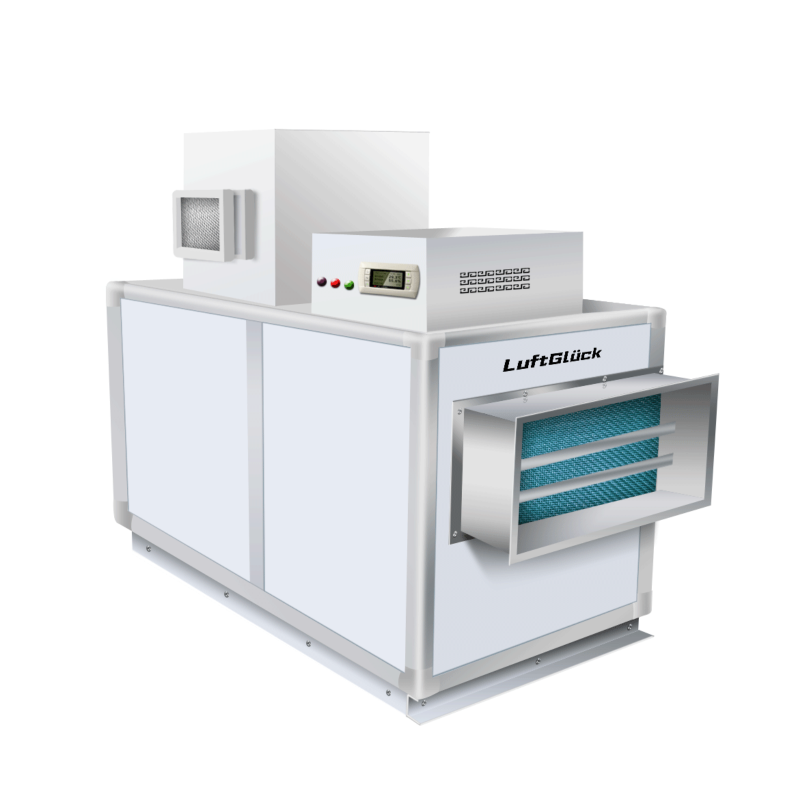
Industrial facilities and commercial environments often face unique humidity challenges that require specialized moisture control solutions. A customizable rotary dehumidifier offers the flexibility and precision needed to address specific environmental requirements across diverse applications. These advanced systems provide tailored humidity management by allowing modifications to capacity, configuration, and operational parameters to match exact facility needs.
Understanding Rotary Dehumidification Technology
Operating Principles of Rotary Systems
Rotary dehumidification systems utilize a continuously rotating desiccant wheel to remove moisture from air streams. The wheel contains hygroscopic materials that adsorb water vapor from the process air as it passes through one section of the rotor. Simultaneously, a heated regeneration air stream passes through another section, removing the captured moisture and restoring the desiccant's capacity. This continuous cycle enables consistent moisture removal without interruption.
The effectiveness of a customizable rotary dehumidifier depends on several key parameters including wheel speed, regeneration temperature, and air flow rates. By adjusting these variables, operators can optimize performance for specific humidity targets and environmental conditions. The desiccant material selection also plays a crucial role, with options ranging from silica gel to molecular sieves depending on application requirements.
Advantages Over Conventional Dehumidifiers
Unlike refrigeration-based systems that struggle in low-temperature environments, rotary dehumidifiers maintain consistent performance across a wide temperature range. They can achieve extremely low humidity levels, often reaching dew points below -40°F, which is impossible with traditional cooling coil systems. This capability makes them essential for applications requiring precise moisture control in challenging conditions.
The modular design of modern customizable rotary dehumidifier systems allows for easy maintenance and component replacement. Individual sections can be serviced without shutting down the entire system, minimizing operational disruptions. Additionally, these systems offer superior energy efficiency in low-humidity applications, as they avoid the energy penalties associated with overcooling and reheating air streams.
Customization Options for Specific Applications
Capacity and Size Modifications
Manufacturing facilities require dehumidification systems that match their exact air handling requirements. A customizable rotary dehumidifier can be configured with varying wheel diameters, depths, and housing dimensions to achieve specific moisture removal capacities. Standard units typically handle air flows from 1,000 to 50,000 CFM, but custom configurations can accommodate much larger volumes for industrial applications.
The modular approach allows multiple units to work in parallel or series configurations depending on the facility's layout and capacity needs. This scalability ensures that the dehumidification system can grow with expanding operations or be adjusted for seasonal variations in humidity loads. Custom sizing also optimizes energy consumption by avoiding oversized equipment that cycles inefficiently.
Control System Integration
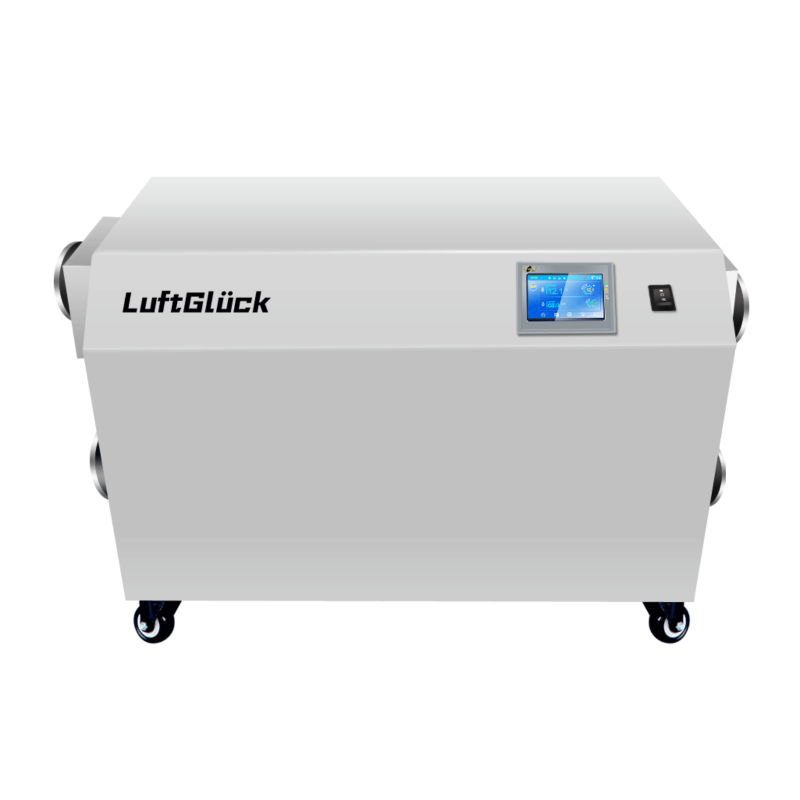
Modern facilities demand sophisticated control capabilities that integrate seamlessly with existing building management systems. Customizable rotary dehumidifier systems can incorporate advanced PLC controls, touchscreen interfaces, and remote monitoring capabilities. These features enable precise humidity setpoint control, alarm management, and predictive maintenance scheduling.
Integration options include various communication protocols such as BACnet, Modbus, and Ethernet connectivity for seamless data exchange. Custom control algorithms can be developed to optimize energy consumption while maintaining strict humidity tolerances. The flexibility to program specific operating sequences ensures optimal performance for unique process requirements.
Environmental Applications and Industry Solutions
Pharmaceutical and Healthcare Facilities
Pharmaceutical manufacturing requires stringent environmental controls to ensure product quality and regulatory compliance. A customizable rotary dehumidifier can be configured with specialized coatings and materials that meet FDA validation requirements. These systems maintain precise humidity levels critical for tablet compression, powder handling, and sterile packaging operations.
Healthcare environments benefit from customization options that address infection control concerns while maintaining comfort conditions. Specialized filtration integration and UV sterilization capabilities can be incorporated into the dehumidification system design. The ability to maintain low humidity levels helps prevent mold growth and reduces the survival time of airborne pathogens in critical areas.
Food Processing and Storage
Food industry applications demand reliable humidity control to prevent spoilage, extend shelf life, and maintain product quality. Customizable rotary dehumidifier systems can incorporate food-grade materials and sanitary design features that meet USDA and FDA requirements. Stainless steel construction, smooth surfaces, and easy-clean designs prevent contamination while ensuring effective moisture control.
Different food products require specific humidity ranges for optimal storage and processing conditions. Custom programming allows precise control for applications ranging from chocolate manufacturing that requires extremely low humidity to cheese aging facilities that need moderate moisture levels. The flexibility to adjust operating parameters ensures optimal conditions for diverse food processing requirements.
Energy Efficiency and Sustainability Features
Heat Recovery Integration
Energy efficiency is a critical consideration in modern dehumidification system design. Customizable rotary dehumidifier systems can incorporate various heat recovery methods to minimize energy consumption. Heat wheel recovery systems capture thermal energy from the regeneration air stream and use it to preheat incoming process air, significantly reducing heating costs.
Advanced heat exchanger configurations can achieve thermal efficiencies exceeding 80%, substantially reducing the system's overall energy footprint. Custom heat recovery designs can be optimized for specific climate conditions and operating schedules to maximize energy savings. This approach often results in payback periods of less than three years through reduced utility costs.
Sustainable Operation Strategies
Environmental sustainability considerations drive many customization decisions in modern dehumidification systems. Low-temperature regeneration capabilities reduce energy consumption while maintaining effective moisture removal performance. Variable speed drives on fans and the rotation motor allow precise matching of system capacity to actual load requirements, preventing energy waste from oversized operation.
The durability and longevity of customizable rotary dehumidifier components contribute to sustainability by reducing replacement frequency and waste generation. High-quality desiccant wheels can operate effectively for over 100,000 hours with proper maintenance. Custom maintenance programs can be developed to optimize component life while ensuring consistent performance throughout the system's operational lifetime.
Installation and Maintenance Considerations
Site-Specific Installation Requirements
Each facility presents unique installation challenges that require customized solutions. Space constraints, structural limitations, and access requirements all influence the design of a customizable rotary dehumidifier system. Modular construction allows units to be assembled on-site when space restrictions prevent delivery of fully assembled systems.
Custom mounting arrangements can accommodate unusual building configurations or retrofit applications where standard installations are not feasible. Vibration isolation, seismic restraints, and specialized foundations can be incorporated into the design to meet local building codes and environmental conditions. The flexibility to adapt to site-specific requirements ensures successful installation in challenging environments.
Preventive Maintenance Programs
Reliable operation of dehumidification systems depends on well-planned maintenance programs tailored to specific operating conditions. Customizable rotary dehumidifier systems can be configured with maintenance-friendly features such as removable access panels, service platforms, and component monitoring systems. These features reduce maintenance time and costs while improving system reliability.
Custom maintenance schedules consider factors such as operating hours, environmental conditions, and air quality to optimize component replacement intervals. Predictive maintenance capabilities can be integrated to monitor system performance and provide early warning of potential issues. This approach minimizes unexpected downtime while ensuring consistent humidity control performance.
Performance Monitoring and Optimization
Real-Time System Monitoring
Effective operation of a customizable rotary dehumidifier requires continuous monitoring of key performance parameters. Advanced sensor arrays can track inlet and outlet humidity levels, temperatures, air flow rates, and wheel rotation speed. This data enables operators to verify that the system is meeting humidity targets while operating efficiently.
Custom data logging and trending capabilities provide historical performance records that support maintenance planning and energy optimization efforts. Automated reporting functions can generate compliance documentation for regulated industries while alerting operators to performance deviations. Remote monitoring capabilities enable off-site technical support and troubleshooting assistance when needed.
Performance Optimization Strategies
Ongoing optimization ensures that dehumidification systems continue to meet changing facility requirements while minimizing energy consumption. Custom control algorithms can automatically adjust operating parameters based on seasonal variations, occupancy patterns, and process demands. This adaptive approach maximizes efficiency while maintaining strict humidity control.
Regular performance assessments help identify opportunities for system improvements or modifications. The modular nature of customizable rotary dehumidifier systems allows for component upgrades or capacity adjustments without complete system replacement. This flexibility extends system life while adapting to evolving facility requirements and technological advances.
FAQ
What factors determine the customization requirements for a rotary dehumidifier system
The primary factors include the required moisture removal capacity, target humidity levels, available space, air quality requirements, and integration needs with existing HVAC systems. Operating temperature range, energy efficiency goals, and maintenance accessibility also influence customization decisions. A thorough assessment of facility conditions and performance requirements guides the selection of appropriate customization options.
How does a customizable rotary dehumidifier perform in extreme temperature conditions
Rotary dehumidification systems excel in extreme temperature applications where refrigeration-based systems fail. They operate effectively in temperatures ranging from -40°F to over 200°F without performance degradation. Custom configurations can optimize regeneration temperatures and desiccant materials for specific temperature ranges, ensuring reliable operation in challenging environments such as cold storage facilities or high-temperature industrial processes.
What maintenance requirements are associated with customized rotary dehumidifier systems
Maintenance requirements depend on operating conditions and customization features but typically include regular desiccant wheel inspection, filter replacement, and motor servicing. Custom maintenance programs can be developed based on specific operating conditions to optimize component life and minimize downtime. Predictive maintenance features can monitor system performance and provide early warning of potential issues, reducing unexpected maintenance events.
How long does it take to design and manufacture a customized rotary dehumidifier
Lead times for customizable rotary dehumidifier systems typically range from 8 to 16 weeks depending on the complexity of modifications and current manufacturing schedules. Simple configuration changes may require less time, while extensive customizations involving specialized materials or unique control systems may extend delivery schedules. Early engagement with manufacturers during the design phase helps ensure realistic project timelines and optimal system configuration.
Table of Contents
- Understanding Rotary Dehumidification Technology
- Customization Options for Specific Applications
- Environmental Applications and Industry Solutions
- Energy Efficiency and Sustainability Features
- Installation and Maintenance Considerations
- Performance Monitoring and Optimization
-
FAQ
- What factors determine the customization requirements for a rotary dehumidifier system
- How does a customizable rotary dehumidifier perform in extreme temperature conditions
- What maintenance requirements are associated with customized rotary dehumidifier systems
- How long does it take to design and manufacture a customized rotary dehumidifier