
 EN
EN
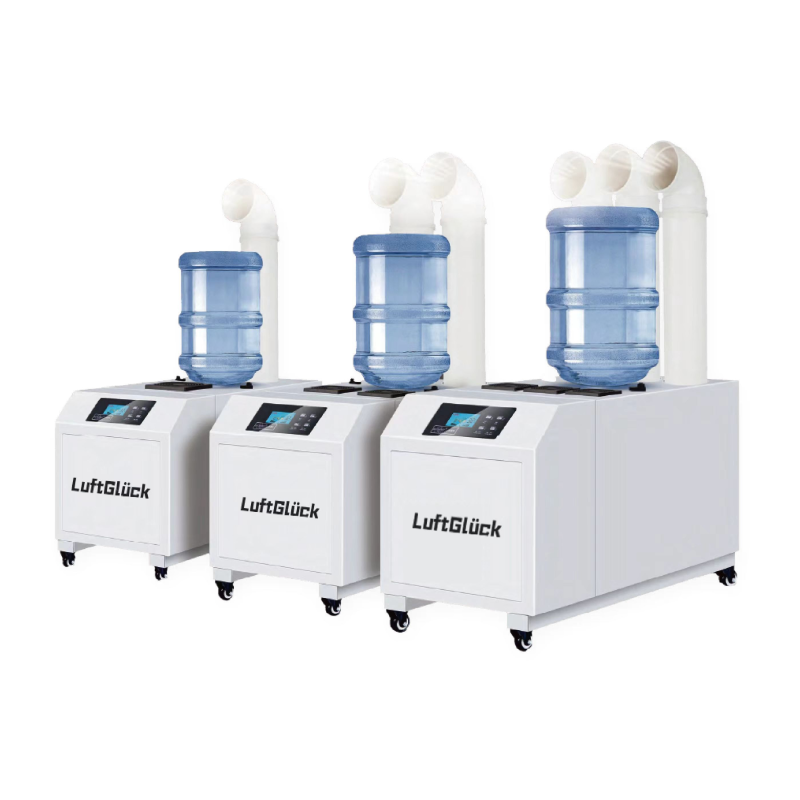
Storage warehouses face significant challenges during dry seasons when humidity levels drop dramatically, threatening product quality and operational efficiency. The delicate balance of environmental conditions becomes critical as goods ranging from electronics to agricultural products require specific moisture levels to maintain their integrity. When humidity falls below optimal ranges, materials can become brittle, electronics may suffer static damage, and organic products lose moisture content rapidly. An ultrasonic humidifier emerges as the preferred solution for warehouse managers seeking precise humidity control without the drawbacks of traditional humidification systems.
The technology behind ultrasonic humidification represents a significant advancement in environmental control systems for large-scale storage facilities. Unlike steam-based or evaporative systems, an ultrasonic humidifier operates through high-frequency vibrations that create microscopic water droplets, ensuring even distribution throughout expansive warehouse spaces. This method eliminates the need for heating elements, reducing energy consumption while providing consistent moisture output that adapts to varying seasonal demands.
Understanding Ultrasonic Humidification Technology
Core Mechanism and Operation Principles
The fundamental operation of an ultrasonic humidifier relies on piezoelectric transducers that vibrate at frequencies exceeding 20,000 Hz, well beyond human hearing range. These vibrations create cavitation in water, breaking surface tension and generating a fine mist of water particles typically measuring 1-5 microns in diameter. This process occurs without heat generation, making it inherently energy-efficient compared to steam humidifiers that require substantial electrical input for water heating.
The mist produced by an ultrasonic humidifier disperses rapidly into the surrounding air, where it evaporates almost instantaneously, increasing relative humidity without creating wet surfaces or condensation issues. This characteristic proves particularly valuable in warehouse environments where moisture accumulation on stored goods or structural elements could lead to damage, corrosion, or mold growth. The precise control mechanisms allow operators to maintain humidity levels within narrow tolerances, typically ±2-3% of target values.
Advanced Control Systems and Monitoring
Modern ultrasonic humidifier systems incorporate sophisticated control algorithms that respond to real-time environmental conditions measured by distributed sensor networks throughout the warehouse space. These sensors continuously monitor temperature, relative humidity, and air circulation patterns, feeding data to central processing units that adjust mist output accordingly. The integration of IoT connectivity enables remote monitoring and control, allowing facility managers to optimize humidity levels from anywhere while maintaining detailed logs of environmental conditions.
The control systems also feature predictive capabilities that anticipate humidity changes based on weather forecasts, seasonal patterns, and operational schedules. This proactive approach ensures that humidity levels remain stable even as external conditions fluctuate dramatically during transition periods between seasons. Advanced algorithms can account for factors such as door openings, temperature variations, and air exchange rates to maintain optimal storage environments consistently.
Operational Advantages in Warehouse Environments
Energy Efficiency and Cost Reduction
The energy efficiency of an ultrasonic humidifier significantly outperforms traditional humidification methods in warehouse applications where large volumes of air require treatment. Steam humidifiers typically consume 2-3 kilowatts per kilogram of water vapor produced, while ultrasonic systems require only 50-100 watts for equivalent output. This dramatic difference in energy consumption translates to substantial cost savings, particularly in facilities operating continuously throughout dry seasons when humidification demands peak.
Beyond direct energy costs, the reduced electrical load of an ultrasonic humidifier system minimizes infrastructure requirements for electrical distribution and cooling systems. The absence of heating elements eliminates the need for high-capacity electrical circuits and reduces heat generation within the warehouse, potentially lowering air conditioning costs during warmer periods. The cumulative effect of these efficiency gains often justifies the initial investment in ultrasonic technology within 12-18 months of operation.
Maintenance Requirements and Operational Reliability
The mechanical simplicity of an ultrasonic humidifier contributes to exceptional operational reliability and minimal maintenance requirements compared to complex steam or evaporative systems. The primary maintenance tasks involve periodic cleaning of the transducer surfaces and replacement of water filters, typically required monthly or quarterly depending on water quality and usage intensity. These routine procedures can be performed by facility maintenance staff without specialized training or expensive service contracts.
The absence of heating elements, steam traps, and complex plumbing systems eliminates common failure points that plague traditional humidification equipment. Ultrasonic systems demonstrate exceptional longevity, with transducer assemblies operating reliably for 5-7 years under continuous use conditions. This reliability factor proves crucial for warehouses handling sensitive goods where humidity control interruptions could result in significant product losses or quality degradation.
Product Protection and Quality Preservation
Impact on Different Storage Categories
Various product categories stored in warehouses exhibit different sensitivities to humidity fluctuations, making the precise control offered by an ultrasonic humidifier essential for comprehensive inventory protection. Electronics and semiconductor components require humidity levels between 30-60% to prevent electrostatic discharge while avoiding condensation that could cause corrosion. The fine mist distribution ensures uniform humidity throughout storage areas, eliminating dead zones where humidity might fall below critical thresholds.
Organic materials, including textiles, paper products, and wooden items, benefit significantly from stable humidity maintenance provided by ultrasonic systems. These materials naturally absorb and release moisture based on ambient conditions, and rapid humidity changes can cause dimensional instability, cracking, or warping. An ultrasonic humidifier maintains steady moisture levels that allow materials to reach equilibrium without stress-inducing fluctuations that compromise structural integrity or appearance quality.
Prevention of Static Electricity and Contamination
Static electricity generation increases exponentially as humidity levels drop below 40%, creating significant risks for warehouses handling electronic components, pharmaceuticals, or combustible materials. The consistent moisture output from an ultrasonic humidifier maintains humidity at levels that effectively dissipate static charges, reducing the risk of component damage or ignition hazards. This protection extends to packaging materials and handling equipment, preventing static-related contamination issues.
The ultra-fine mist particles produced by ultrasonic technology do not carry contaminants or introduce foreign materials into the warehouse atmosphere, unlike some evaporative systems that may distribute minerals or biological contaminants. This clean humidification process proves particularly important for facilities storing sensitive products such as medical devices, optical components, or precision instruments where contamination could render products unusable or unsafe.
Installation and Integration Considerations
Space Requirements and System Sizing
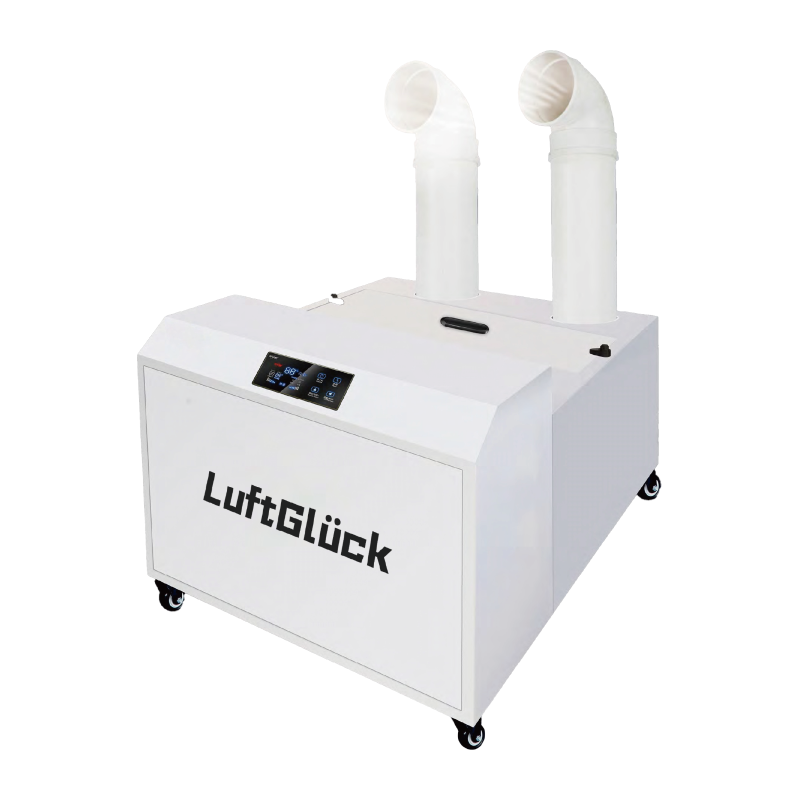
The compact design of an ultrasonic humidifier system provides significant advantages for warehouse installations where floor space commands premium value. Unlike steam systems requiring substantial boiler rooms or evaporative systems needing large air handling units, ultrasonic equipment can be mounted overhead or integrated into existing HVAC infrastructure without major structural modifications. The modular nature of these systems allows for scalable installations that can grow with facility needs.
Proper sizing calculations for ultrasonic humidifier systems consider factors beyond simple air volume, including air exchange rates, thermal loads, moisture sources, and vapor barriers within the warehouse structure. Professional engineers typically specify systems with 20-30% capacity margin to accommodate peak demand periods and ensure adequate response times during rapid humidity changes. The distributed placement of multiple smaller units often provides better coverage than single large systems, particularly in warehouses with complex layouts or varying storage density zones.
Integration with Existing HVAC Systems
Modern ultrasonic humidifier installations integrate seamlessly with existing building management systems through standardized communication protocols such as BACnet, Modbus, or proprietary systems. This integration enables centralized monitoring and control while allowing the humidification system to coordinate with heating, cooling, and ventilation equipment for optimal energy efficiency. The ability to share sensor data and operational status across building systems creates opportunities for advanced control strategies that optimize overall facility performance.
The installation process typically involves mounting humidifier units in supply air ducts or strategic locations throughout the warehouse, connecting water supply lines with appropriate filtration systems, and establishing electrical connections for power and control signals. Professional installers ensure proper mist distribution patterns and adequate mixing distances to achieve uniform humidity throughout the storage space. Commissioning procedures verify system performance against design specifications and establish baseline operational parameters.
Economic Benefits and Return on Investment
Quantifiable Cost Savings
The economic advantages of implementing an ultrasonic humidifier system extend far beyond energy cost reductions, encompassing product loss prevention, reduced insurance premiums, and improved operational efficiency. Warehouses typically experience 2-5% annual product losses due to humidity-related damage during dry seasons, representing significant financial impact for facilities handling high-value inventory. Proper humidification systems can reduce these losses by 80-90%, creating immediate positive cash flow that often exceeds system operating costs.
Insurance companies increasingly recognize the risk mitigation value of professional humidity control systems, offering premium reductions of 5-15% for facilities demonstrating comprehensive environmental control measures. The documentation capabilities of modern ultrasonic humidifier systems provide detailed environmental logs that support insurance claims and demonstrate due diligence in product protection. These factors, combined with reduced maintenance costs and improved worker comfort, typically generate payback periods of 18-36 months for properly specified installations.
Long-term Value Proposition
The longevity and reliability of ultrasonic humidifier technology contribute to exceptional long-term value propositions for warehouse operators committed to maintaining optimal storage conditions. Unlike systems requiring frequent replacement of consumable components or major overhauls, ultrasonic systems maintain consistent performance for decades with minimal intervention. This reliability translates to predictable operating costs and eliminates the disruption associated with emergency repairs or system replacements.
The scalability of ultrasonic systems provides additional long-term value as warehouse operations expand or storage requirements change. Additional capacity can be added incrementally without replacing existing equipment, protecting the initial investment while accommodating growth. The advancing technology in ultrasonic humidifier systems continues to improve efficiency and control capabilities, often through software updates rather than hardware replacement, ensuring continued competitiveness throughout the system lifecycle.
FAQ
How much energy does an ultrasonic humidifier consume compared to steam systems
An ultrasonic humidifier typically consumes 95% less energy than equivalent steam humidification systems, requiring only 50-100 watts per kilogram of water vapor produced compared to 2-3 kilowatts for steam systems. This dramatic energy efficiency results from the elimination of heating requirements, as ultrasonic technology creates mist through mechanical vibration rather than phase change processes. For large warehouse applications, this efficiency difference can reduce annual energy costs by $10,000-50,000 depending on facility size and operating hours.
What maintenance is required for ultrasonic humidifiers in warehouse environments
Maintenance requirements for warehouse ultrasonic humidifier systems are minimal, involving monthly cleaning of transducer surfaces to remove mineral deposits and quarterly replacement of water filters depending on water quality. Annual inspection of electrical connections and control systems ensures optimal performance, while transducer assemblies typically require replacement every 5-7 years under continuous operation. The simplicity of these maintenance tasks allows facility staff to perform most procedures without specialized training or expensive service contracts.
Can ultrasonic humidifiers handle large warehouse volumes effectively
Modern ultrasonic humidifier systems can effectively treat warehouse spaces exceeding 100,000 square feet through strategic placement of multiple units and proper air circulation design. The key to successful large-space humidification lies in understanding air movement patterns and placing units where mist can distribute evenly throughout the storage area. Professional system design considers factors such as ceiling height, air exchange rates, and thermal stratification to ensure uniform humidity distribution across the entire facility.
What water quality requirements exist for ultrasonic humidifier operation
Ultrasonic humidifier systems perform optimally with water containing less than 50 ppm total dissolved solids, though reverse osmosis or deionized water provides the best results and extends equipment life. High mineral content water can create white dust deposits and accelerate transducer wear, while biological contaminants may compromise mist quality. Most installations include multi-stage filtration systems incorporating sediment filters, carbon treatment, and final polishing to ensure water quality meets manufacturer specifications and maintains system performance over extended operating periods.
Table of Contents
- Understanding Ultrasonic Humidification Technology
- Operational Advantages in Warehouse Environments
- Product Protection and Quality Preservation
- Installation and Integration Considerations
- Economic Benefits and Return on Investment
-
FAQ
- How much energy does an ultrasonic humidifier consume compared to steam systems
- What maintenance is required for ultrasonic humidifiers in warehouse environments
- Can ultrasonic humidifiers handle large warehouse volumes effectively
- What water quality requirements exist for ultrasonic humidifier operation