
 EN
EN
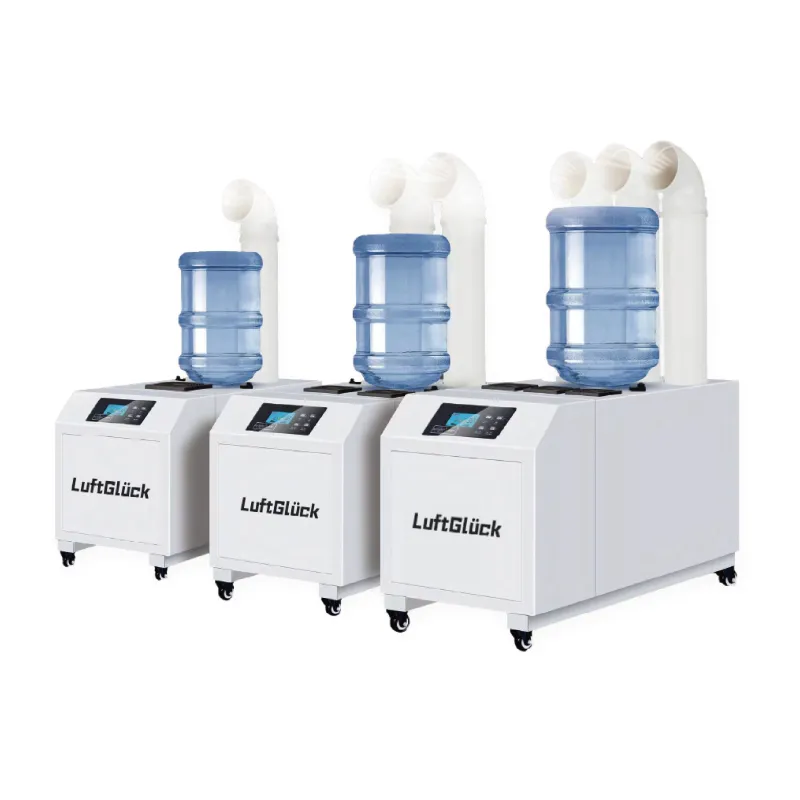
Agricultural supply facilities operate in environments where humidity control is not a luxury but an operational necessity. From seed storage warehouses and fertilizer processing plants to greenhouse supply depots and animal feed distribution centers, maintaining optimal moisture levels directly impacts product quality, inventory preservation, and workplace safety. Without reliable humidity management, facilities risk costly spoilage, dust hazards, and regulatory complications that erode profitability over time. This is precisely why a high-output ultrasonic humidifier has become one of the most strategically valuable investments an agricultural supply operation can make.
The question of why agricultural supply facilities specifically should invest in a high-output ultrasonic humidifier deserves a structured, evidence-based answer. The decision is driven by a combination of biological, mechanical, economic, and regulatory factors that are uniquely intense in the agricultural supply sector. Understanding each of these drivers allows facility managers and procurement decision-makers to evaluate the investment not as an expense, but as a foundational element of responsible and profitable operations. In this article, we examine the key reasons, the operational mechanisms at work, and the practical implications of deploying an industrial-grade ultrasonic humidifier across various agricultural supply contexts.
The Unique Humidity Challenges Inside Agricultural Supply Facilities
Why Moisture Instability Threatens Agricultural Inventory
Agricultural supply facilities house products with inherent biological sensitivity. Seeds, grains, organic soil amendments, dried herbs, animal feed pellets, and fertilizer compounds are all subject to rapid quality degradation when relative humidity fluctuates beyond narrow acceptable ranges. Too much ambient dryness causes seeds to lose viability, organic materials to become brittle, and fine-particle fertilizers to generate hazardous dust. Conversely, excessive moisture promotes mold, fungal contamination, and caking in hygroscopic compounds.
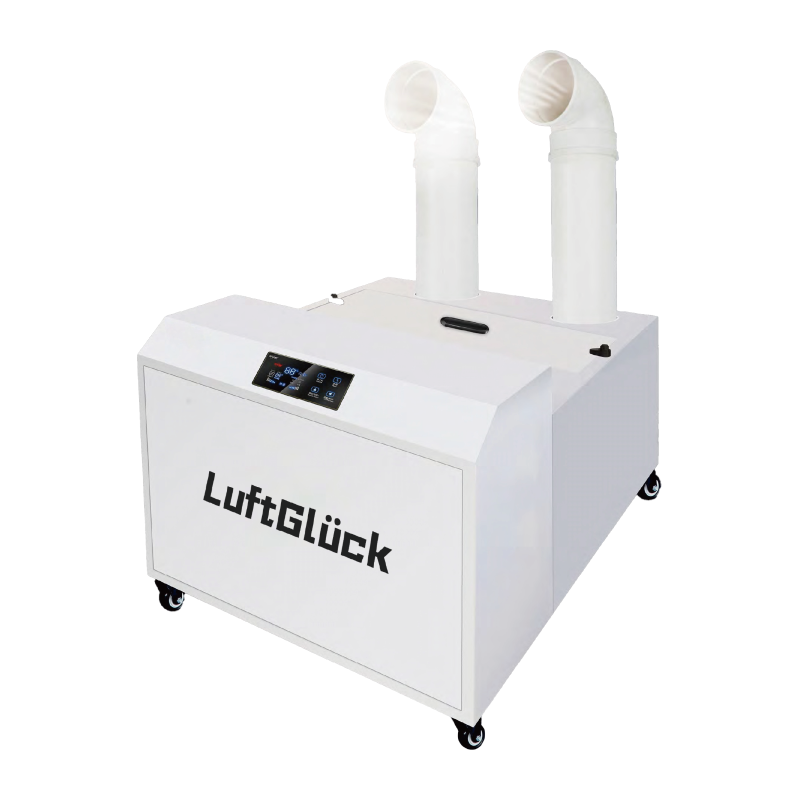
The challenge is not simply achieving a humidity level but sustaining it with precision across large, often poorly insulated warehouse spaces. Conventional steam humidifiers or evaporative systems often fail to deliver uniform coverage in high-ceilinged structures with variable air circulation. An industrial-grade ultrasonic humidifier addresses this by generating an ultra-fine cool mist that disperses consistently throughout the space without introducing excess heat or localized over-saturation. This makes it distinctly suited to the thermal and physical requirements of agricultural storage environments.
Facility managers frequently underestimate how rapidly humidity can drop during winter heating cycles or summer cooling periods. Even a brief dip in relative humidity below 40% over several consecutive days can compromise an entire batch of stored seeds or accelerate the deterioration of packaged organic fertilizers. An ultrasonic humidifier operating at high output capacity can compensate for these fluctuations in real time, maintaining the stable microclimate that agricultural goods require.
High-Output Capacity as a Functional Requirement
Standard residential or light commercial humidifiers are simply insufficient for agricultural supply facilities, which may encompass thousands of square meters of covered storage. Output capacity measured in liters per hour directly determines how effectively a unit can counteract moisture loss in large, actively ventilated spaces. A high-output ultrasonic humidifier designed for industrial deployment can generate significantly greater volumes of fine mist per hour compared to consumer-grade alternatives, enabling effective humidity management across expansive floor areas without requiring an impractical number of individual units.
High-output capacity also becomes critical when facilities are subject to rapid humidity changes due to loading dock operations, frequent door openings, or seasonal temperature swings. Each time large bay doors open, a significant volume of conditioned interior air is exchanged with exterior air of very different humidity levels. A powerful ultrasonic humidifier can recover equilibrium far more quickly than lower-output alternatives, minimizing the duration and severity of these disruptive humidity events.
Why Ultrasonic Technology Outperforms Alternatives in This Context
Energy Efficiency at Industrial Scale
One of the most compelling reasons agricultural supply facilities choose an ultrasonic humidifier over steam-based systems is energy consumption. Steam humidifiers require significant electrical or gas energy to boil water continuously, resulting in substantially higher operating costs at industrial output levels. Ultrasonic humidification uses high-frequency vibration to atomize water into micro-droplets without heating, consuming a fraction of the energy required by steam systems for equivalent output.
For facilities operating 24 hours a day across multiple months, this energy differential translates into substantial annual savings. Agricultural supply operations already face tight margins driven by commodity price volatility and logistics costs. Deploying an ultrasonic humidifier rather than a steam alternative directly reduces the facility's energy overhead without sacrificing humidity performance. The long-term cost-of-ownership calculation strongly favors ultrasonic technology at the output scales relevant to agricultural supply environments.
Additionally, because ultrasonic systems do not produce heat as a byproduct of humidification, they avoid the secondary cooling burden that steam systems can impose during warm seasons. In facilities where temperature management is already a challenge due to the heat generated by stored biological materials or processing equipment, an ultrasonic humidifier provides humidity control without exacerbating the thermal load.
Fine Mist Distribution and Product Safety
The particle size generated by an ultrasonic humidifier is dramatically smaller than the droplets produced by pressure-spray or spin-disk systems. These micro-fine particles remain suspended in the air for extended periods, achieving far more uniform distribution throughout the facility before settling. This means that even in high-rack storage configurations, the ultrasonic humidifier can condition the full vertical height of the space rather than just the floor-level air mass.
This fine mist characteristic also means that the ultrasonic humidifier does not introduce visible wetness onto product surfaces, packaging materials, or machinery. For agricultural supply facilities storing paper-bagged seeds, cardboard-packaged fertilizers, or electronically controlled dispensing equipment, this is a critical safety feature. The risk of packaging damage, ink smearing, or corrosion associated with wetter humidification methods is effectively eliminated when deploying a properly calibrated ultrasonic humidifier system.
Protecting Seed Viability and Organic Product Integrity
The Science of Moisture and Seed Storage
Seed viability is one of the most commercially sensitive variables in agricultural supply. Germination rates are directly influenced by the humidity conditions under which seeds are stored between harvest and sale. Industry guidance consistently points to a relative humidity range of 40% to 60% as optimal for most commercial seed varieties during storage. Deviations outside this range—particularly sustained dry periods—accelerate the aging of seed embryos and can reduce germination rates to commercially unacceptable levels.
Deploying a high-output ultrasonic humidifier with precise humidity control allows facility operators to program target set points that align with the specific requirements of the seed varieties in storage. Modern industrial ultrasonic humidifier systems integrate with digital hygrometers and automated controls, enabling continuous feedback-driven adjustment rather than relying on manual monitoring. This level of precision is essential for facilities that simultaneously store multiple seed types with slightly different humidity tolerance profiles.
The financial stakes are significant. A facility that fails to maintain appropriate humidity for stored seed inventory risks not only the direct cost of product loss but also the reputational consequences of delivering below-specification goods to farmers and distributors. Investing in an ultrasonic humidifier capable of maintaining consistent conditions is, in this context, a form of quality assurance infrastructure as fundamental as refrigeration in food storage or climate control in pharmaceutical logistics.
Preserving Organic Amendments and Biological Inputs
Beyond seeds, agricultural supply facilities increasingly stock a range of biological products including mycorrhizal inoculants, beneficial bacterial blends, organic compost teas, and biostimulant concentrates. These products contain living microorganisms that are acutely sensitive to humidity extremes. Desiccation rapidly destroys colony viability, while excessive moisture can trigger premature fermentation or contamination. The narrow humidity window within which these products retain their biological activity demands exactly the kind of precision humidity management that an ultrasonic humidifier provides.
Organic fertilizer inputs such as blood meal, bone meal, and kelp-based amendments are also prone to caking and clumping when humidity fluctuates. Caked products lose their flowability, making accurate application dosing impossible and increasing the likelihood of customer complaints and returns. Maintaining stable relative humidity through an ultrasonic humidifier preserves the physical properties of these materials throughout their shelf life, reducing waste and supporting consistent product performance in the field.
Dust Suppression and Worker Safety Benefits
Why Agricultural Dust Is a Serious Hazard
Agricultural supply facilities generate substantial quantities of fine particulate matter through normal operations. The handling of grain, flour, dried organic amendments, powdered fertilizers, and desiccated plant materials releases respirable dust that poses documented health risks to workers. Prolonged exposure to agricultural dust is associated with respiratory conditions including occupational asthma, hypersensitivity pneumonitis, and chronic bronchitis. Regulatory frameworks in many jurisdictions set enforceable limits on airborne particulate concentrations in industrial workplaces.
An ultrasonic humidifier contributes meaningfully to dust suppression by raising the ambient moisture level of the air, causing fine particles to absorb moisture, increase in mass, and settle out of the breathing zone more rapidly. This mechanism does not eliminate dust generation at the source but significantly reduces airborne particle concentrations throughout the facility. Combined with proper ventilation design and personal protective equipment protocols, an ultrasonic humidifier forms a critical layer of environmental control that supports worker health and regulatory compliance.
Electrostatic Discharge Risk Reduction
Dry environments with relative humidity below 30% are also associated with elevated electrostatic discharge risks. In agricultural supply facilities that use electronic weighing systems, automated dispensing equipment, conveyor belt controls, or inventory management terminals, electrostatic discharge events can corrupt data, damage sensitive components, and create ignition hazards in environments where fine organic dust is present. The combination of low humidity and combustible agricultural dust represents a documented fire and explosion risk that facility safety protocols must address.
Maintaining relative humidity above 40% through an ultrasonic humidifier significantly suppresses static charge accumulation by allowing surface charge to dissipate through the slightly conductive moisture film that forms on materials and surfaces. This is a well-established principle in industrial safety engineering. For agricultural supply facilities, deploying an ultrasonic humidifier is therefore not only an inventory protection measure but also a legitimate occupational health and safety intervention with documented risk reduction value.
Operational and Economic Case for High-Output Investment
Scaling Humidity Coverage Across Facility Zones
Agricultural supply facilities are rarely single uniform spaces. Most consist of multiple functional zones including receiving bays, bulk storage areas, packaged goods sections, processing or blending areas, and dispatch staging zones. Each zone may have different humidity requirements and different rates of moisture exchange with the exterior environment. A high-output ultrasonic humidifier system designed for industrial deployment can be configured with multiple distribution heads or networked units that deliver targeted humidity to each zone independently.
This zonal approach ensures that the ultrasonic humidifier investment delivers maximum utility across the full facility footprint rather than concentrating coverage in a single area. Facility managers can prioritize zones containing the highest-value inventory while maintaining baseline humidity across secondary areas. The modularity and scalability of modern ultrasonic humidifier systems make them well-suited to facilities that plan to expand their storage capacity or product range over time.
Return on Investment Through Loss Prevention
Quantifying the return on investment for an ultrasonic humidifier in an agricultural supply context requires accounting for multiple value streams simultaneously. Direct inventory loss prevention is the most straightforward calculation: if a facility stores one million dollars worth of seeds and organic inputs annually, and proper humidity management prevents even a 2% spoilage rate, the annual loss prevention value is $20,000. A high-output ultrasonic humidifier system capable of covering that facility typically represents a fraction of that figure in total installed cost.
Additional ROI contributors include reduced equipment maintenance costs due to lower dust contamination levels, avoided regulatory fines related to air quality violations, reduced worker absenteeism linked to respiratory health improvements, and lower insurance risk profiles that may qualify the facility for favorable coverage terms. When all these factors are aggregated, the investment case for a high-quality ultrasonic humidifier in an agricultural supply environment becomes compelling even before accounting for the energy savings relative to steam alternatives.
Procurement decision-makers should also consider the reputational dimension of product quality assurance. Agricultural supply customers—whether commercial growers, cooperative buyers, or retail garden centers—increasingly scrutinize the storage and handling standards of their suppliers. A facility that can demonstrate certified humidity-controlled storage conditions has a measurable competitive advantage in markets where product quality consistency is a differentiating factor. The ultrasonic humidifier, in this context, supports not only operational performance but also commercial positioning.
FAQ
What humidity level should an ultrasonic humidifier maintain in a seed storage facility?
For most commercial seed varieties, a relative humidity of 40% to 60% is the recommended storage range. An industrial ultrasonic humidifier with programmable set points and integrated sensor feedback can maintain this range continuously, adjusting output dynamically in response to ambient changes caused by temperature fluctuations, door openings, or seasonal conditions. Specific seed types may require narrower ranges, so consulting seed supplier storage guidelines before programming the ultrasonic humidifier is advisable.
Can an ultrasonic humidifier handle the scale of a large agricultural warehouse?
Yes, provided that high-output industrial-grade models are selected and properly distributed across the facility. A single residential or light commercial ultrasonic humidifier would be wholly inadequate for a large warehouse. Industrial ultrasonic humidifier systems are designed to operate with multiple atomizing heads or networked units that collectively deliver the output volumes necessary for large-scale environments. Proper assessment of facility volume, air exchange rates, and target humidity levels is essential for selecting and configuring the right system.
Does an ultrasonic humidifier require significant maintenance in agricultural environments?
All humidification systems require maintenance, and an ultrasonic humidifier is no exception. In agricultural environments, the primary maintenance considerations include regular descaling of the transducer components to remove mineral deposits, cleaning of water distribution lines to prevent biofilm accumulation, and periodic filter inspection if the unit includes air filtration. Using treated or demineralized water can significantly extend service intervals. Compared to steam humidifiers, an ultrasonic humidifier generally has fewer high-wear components and lower maintenance complexity.
Is an ultrasonic humidifier safe to use around electronic equipment in the facility?
When properly calibrated to maintain relative humidity within the 40% to 60% range, an ultrasonic humidifier is considered safe for environments containing electronic equipment. The fine mist particles produced by an ultrasonic humidifier evaporate before reaching most surfaces when the system is correctly sized and positioned. Using demineralized or reverse-osmosis-treated water further reduces the risk of white mineral dust settling on electronic components. Over-humidification—allowing relative humidity to exceed 70%—should be avoided, and modern ultrasonic humidifier controllers with automated shutoff features help prevent this risk.
Table of Contents
- The Unique Humidity Challenges Inside Agricultural Supply Facilities
- Why Ultrasonic Technology Outperforms Alternatives in This Context
- Protecting Seed Viability and Organic Product Integrity
- Dust Suppression and Worker Safety Benefits
- Operational and Economic Case for High-Output Investment
-
FAQ
- What humidity level should an ultrasonic humidifier maintain in a seed storage facility?
- Can an ultrasonic humidifier handle the scale of a large agricultural warehouse?
- Does an ultrasonic humidifier require significant maintenance in agricultural environments?
- Is an ultrasonic humidifier safe to use around electronic equipment in the facility?